
The 5-Second Test: Can Your Website Convince Visitors Before They Leave?
Discover why website user experience decides whether a visitor stays, scrolls and buys — or clicks the back button forever. A practical guide from Erode's leading website design agency.
Picture this: a potential customer lands on your homepage after clicking your ad. Within five seconds, they've already formed an opinion — is this business trustworthy, modern and easy to deal with, or outdated and confusing? This split-second judgment is the real 5-second test, and it is decided entirely by your website user experience. If that first impression fails, no amount of ad spend or SEO ranking will save the sale.
At GS Digital Marketing, we've audited hundreds of local business websites, and the pattern is always the same: strong website user experience wins visitors, a weak one loses them — no matter how good the product is. This guide breaks down exactly what makes up a great one, the mistakes that quietly drive visitors away, and how a specialist team can fix it fast.
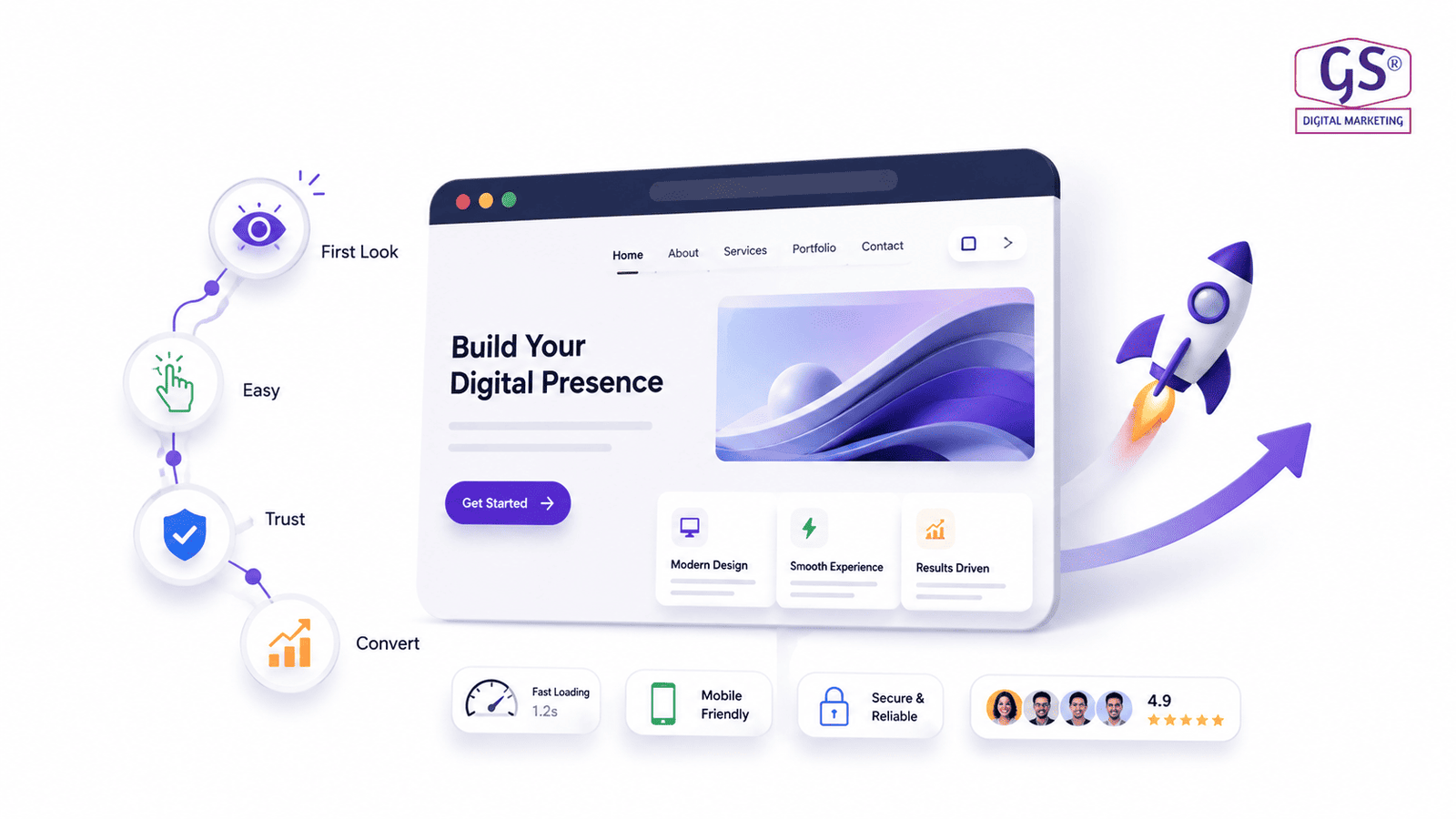
First impressions form in milliseconds — website user experience is your silent salesperson.
What Exactly Is the 5-Second Test?
The 5-second test is a simple usability principle: show someone your website for just five seconds, then ask what they remember. If they can't describe what you do, why you're trustworthy, or what to do next, your site's UX needs urgent work. Visitors don't read websites line by line on their first visit — they scan, judge, and decide. Good UX is designed for exactly this scanning behaviour, guiding the eye toward your message and your call to action instantly.
This is why every serious website design agency in erode starts a project with a UX audit before touching a single line of code — because without a solid user experience, design, content and SEO all lose their impact.
Why Website User Experience Shapes Every First Impression
Trust is built or broken instantly online. A cluttered layout, slow-loading images, or confusing navigation signals "unprofessional" before a visitor even reads your headline. On the other hand, clean spacing, clear typography and a confident call-to-action signal "we know what we're doing." That signal is the entire job of good UX.
These numbers explain why businesses that invest in the user experience consistently out-convert competitors who focus only on traffic. Traffic without experience is a leaking bucket — visitors arrive and immediately leave.
The Building Blocks of Great Website User Experience
Website user experience isn't one single feature — it's the sum of several elements working together seamlessly. Here are the pillars we focus on for every client project.
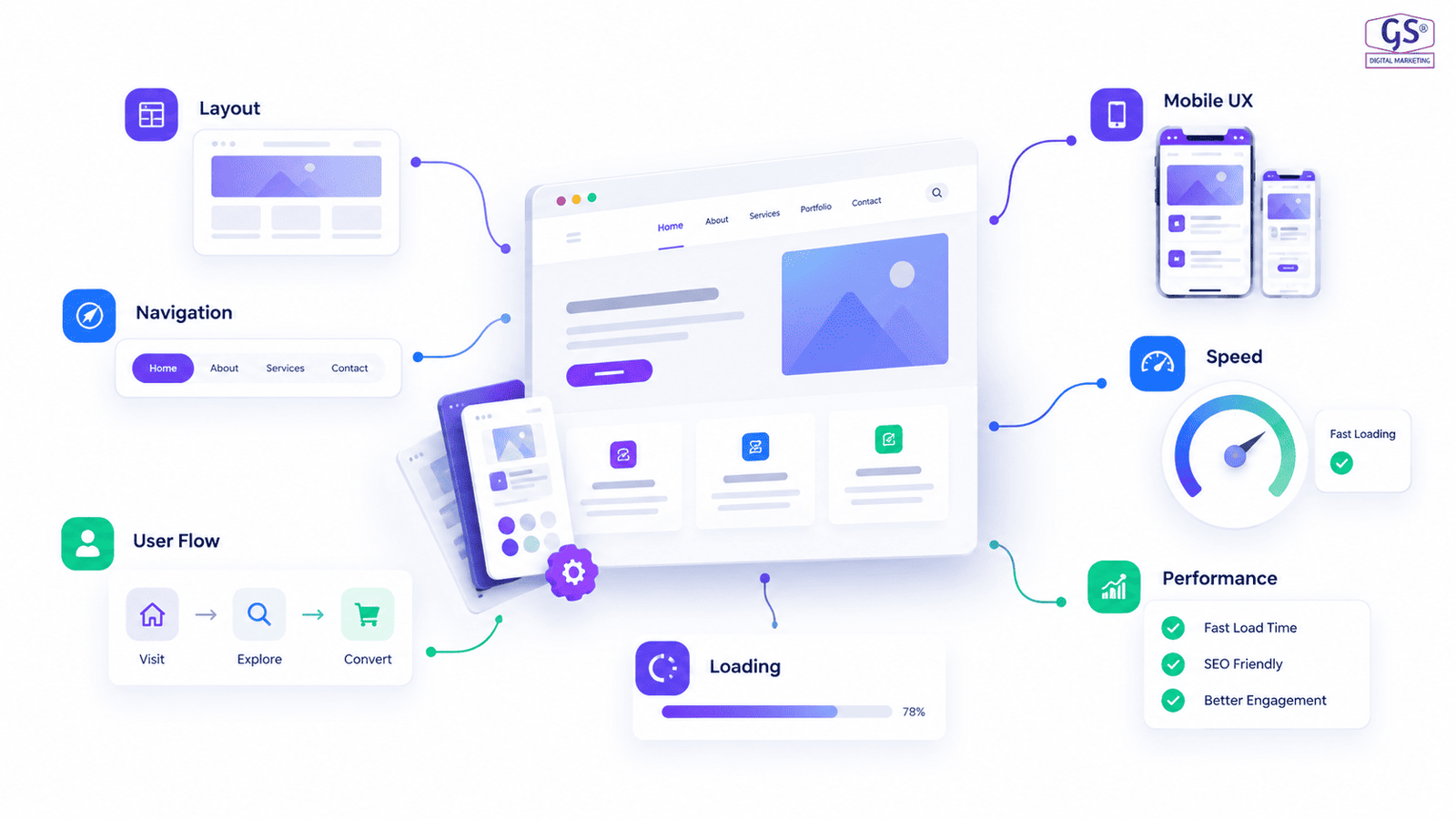
Every element is planned to strengthen the overall experience, from layout to load time.
👁️ Visual Clarity
Clean layouts, purposeful whitespace and readable fonts keep the experience effortless on the eyes.
🧭 Simple Navigation
Visitors should reach any page in three clicks or less — a core rule of good UX.
📱 Mobile Responsiveness
Over 70% of local traffic is mobile, so your design must feel native on every screen size.
⚡ Fast Load Speed
Every extra second of load time damages usability and pushes visitors to hit back.
Why These Four Pillars Work Together
None of these pillars function well in isolation. A beautifully designed page with slow load speed still loses visitors, and a fast page with confusing navigation still fails the 5-second test. It only succeeds when visual design, structure, speed and mobile behaviour are engineered as one connected system — which is exactly how we approach every project.
Common Mistakes That Quietly Kill Website User Experience
Most businesses don't lose visitors because of bad products — they lose them because of avoidable UX mistakes. Watch out for these:
- Auto-playing pop-ups that appear before the page even loads
- Tiny, unclear buttons that don't look clickable
- Walls of text with no headings, icons or visual breaks
- Slow, unoptimized images that delay the entire page
- No clear call-to-action above the fold
- Inconsistent colours and fonts across pages
Each of these individually seems minor, but together they compound into a poor experience that drives up your bounce rate and drags down your rankings, since search engines now factor in engagement signals tied to how visitors actually behave on your pages.
How to Measure Website User Experience on Your Own Site
You don't need expensive software to start evaluating website user experience. A few simple checks will tell you where you stand, and where a redesign should focus first.
- Bounce rate: a high bounce rate on key landing pages is the clearest sign that your UX is pushing visitors away before they engage.
- Average time on page: if visitors leave within seconds, your layout and messaging are not holding attention the way a strong user experience should.
- Scroll depth: tools like Google Analytics or Hotjar show exactly how far visitors scroll, revealing where interest drops off.
- Click maps and heatmaps: these reveal whether visitors are finding your buttons and calls-to-action, or clicking on things that aren't even links.
- Mobile usability report: Google Search Console flags mobile-specific issues that quietly damage rankings and conversions alike.
Running this quick audit every few months keeps your UX aligned with how visitors actually behave, not just how the site looks to you internally. Most business owners are surprised by the gap between what they assume visitors see and what the data actually shows — which is precisely why an outside review matters.
How a Website Design Agency in Erode Fixes These Problems
Fixing website user experience isn't guesswork — it's a structured process of research, wireframing, design and testing. As a hands-on website design agency in erode, our team rebuilds cluttered sites into fast, focused experiences that guide visitors straight to a decision.
- Auditing current UX against real visitor behaviour data
- Redesigning layouts around clarity, hierarchy and one clear action per page
- Compressing and optimizing every image for near-instant load speed
- Testing navigation on real mobile devices, not just desktop previews
- Adding trust signals — reviews, certifications, contact visibility — near the top of the page
This is exactly the kind of hands-on rebuild we deliver as a website design agency in erode working with local businesses across Tamil Nadu — because UX improvements only matter when they're implemented correctly, tested, and measured.
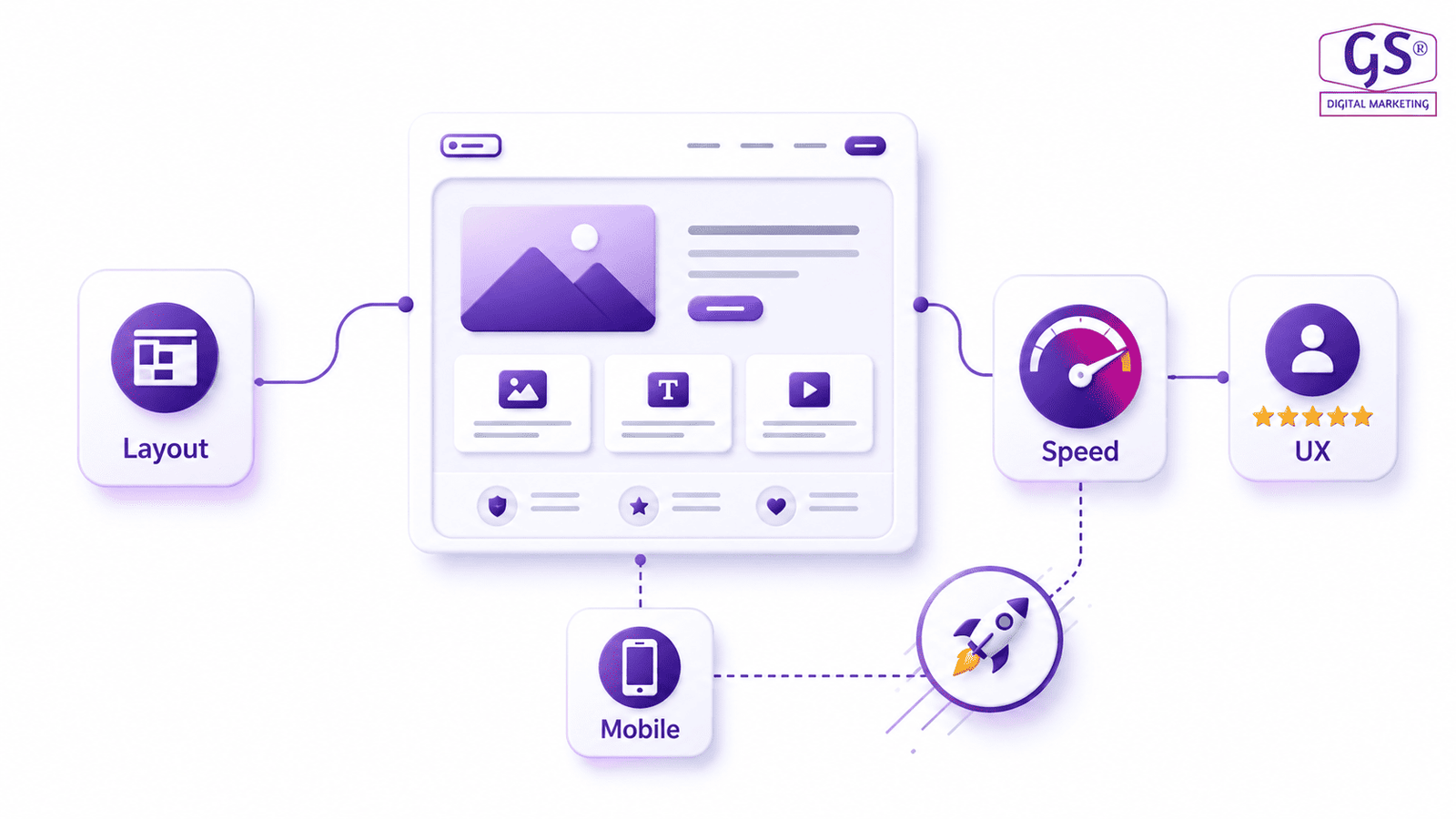
A structured redesign process turns a weak experience into a conversion engine.
Why This Matters Beyond Just Design
Good website user experience doesn't live in isolation — it directly powers your marketing results. Every campaign your digital marketing agency in erode runs, whether it's Google Ads, SEO or social media, sends traffic to your website. If that experience is weak at the landing point, you're paying to attract visitors who leave without converting.
That's why we treat website design and marketing strategy as one connected system. As a digital marketing agency in erode, we don't just drive traffic — we make sure every click lands on a page engineered around a strong user experience, so your ad budget and SEO rankings actually turn into enquiries and sales.
Working with a full-service digital marketing agency in erode means your campaigns and your site's UX are aligned from day one, instead of being handled by disconnected vendors who never talk to each other.
Ready to Pass the 5-Second Test?
Let's audit your website user experience and show you exactly where visitors are dropping off — free, no obligation.
Frequently Asked Questions
Website user experience refers to how easily and pleasantly a visitor can use your site — from layout and speed to navigation and mobile design. It matters because it directly influences whether visitors trust your business and take action, or leave within seconds.
Under 3 seconds is the widely accepted benchmark. Beyond that, bounce rates climb sharply, and the user experience suffers regardless of how good your design looks.
Yes. Most projects are UX-focused redesigns that keep your existing content and branding while restructuring layout, navigation and speed for a better user experience and conversions.
Yes. Search engines track engagement signals like bounce rate, time on page and mobile usability — all outcomes of a strong user experience — and factor them into rankings.